Susan C.
Yelp
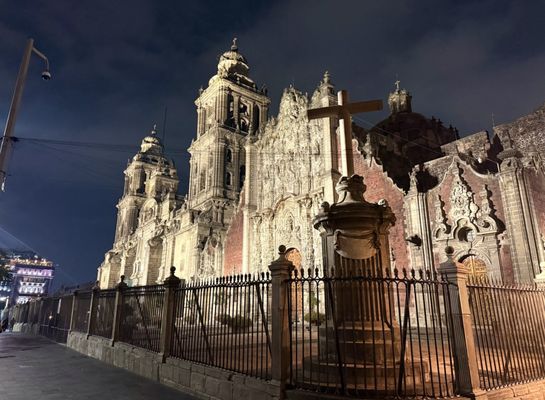
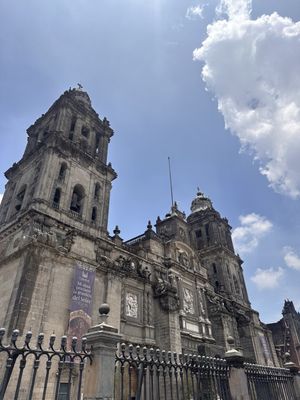
The official name is the Catedral Metropolitana de la Asunción de la Bienaventurada Virgen María a los cielos (The Metropolitan Cathedral of the Assumption of the Most Blessed Virgin Mary into Heaven), though it's commonly known as the Mexico City Metropolitan Cathedral, and functions as a chapter of the Catholic Archdiocese of Mexico.
The cathedral is sits on the edge of El Zócalo, the central square in the historic district of Mexico City, immediately west of Templo Mayor and covering part of the sacred precinct. When the Spanish conquered the Tenochtitlan, they tore down most of the prior structures in 1521 and built a church. In the decades later from 1573 to 1813 various sections were constructed surrounding it then later replacing the initial building, becoming what it is today.
It's considered the first cathedral built in the Americas, with materials scavenged from destroyed pyramids and stone structures, its style influenced by Spanish Gothic cathedrals incorporating Baroque and Neoclassical elements considering its extensive period of construction. Much time spent was due to the sinking ground and dropping water tables of the land beneath the site, with the soft soil (being on a former island in a lake) causing varied foundational stability as the building also sat over the uneven surfaces of pre-existing structures.
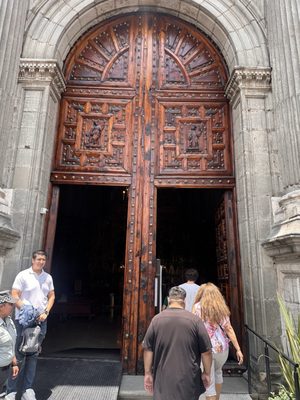
Visiting on a January weekday morning around 10am, it wasn't crowded though there were a fair amount of tourists and closer to 11am more people arrived. Entrance is free and there are a few areas open to the public--the main cathedral building and the Metropolitan Tabernacle (to its right), connected by a hallway. There is a crypt in the basement housing the remains of quite a few historical figures, though from what I could gather a pre-booked tour is required. Aside from a few main altarpieces, there are 16 side-chapels in the cathedral, of which 14 are open to the public.
If you take your time you could probably spend an hour though I was there about 30 minutes. There are descriptions of the altarpieces and some placards with information on the layout and history of the church though most were in Spanish.
For more info:
https://mexicocity.cdmx.gob.mx/venues/metropolitan-cathedral/?lang=en
https://catedralmetropolitana.mx