Santo Mauro, a Luxury Collection Hotel, Madrid
Hotel · Almagro ·
Palatial former ducal residence with elegant rooms, garden


.jpg "Santo Mauro, a Luxury Collection Hotel, Madrid by Courtesy Autograph Collection")

.jpg "Santo Mauro, a Luxury Collection Hotel, Madrid by Courtesy Autograph Collection")








Information
Calle de Zurbano, 36, Chamberí, 28010 Madrid, Spain Get directions
Palatial former ducal residence with elegant rooms, garden
Calle de Zurbano, 36, Chamberí, 28010 Madrid, Spain Get directions
"Set in a former Duke’s 1895 neoclassical mansion, it epitomizes Madrid’s vein of Key hotels housed in historic 19th- or 20th-century facades." - The MICHELIN Guide
"Housed in a French-style neoclassical residence that once belonged to a duke, this hotel pairs Italian marble fireplaces and Persian rugs with the aura of aristocratic history, delivering a palatial, historically rooted luxury experience in Madrid." - Mitchell Friedman
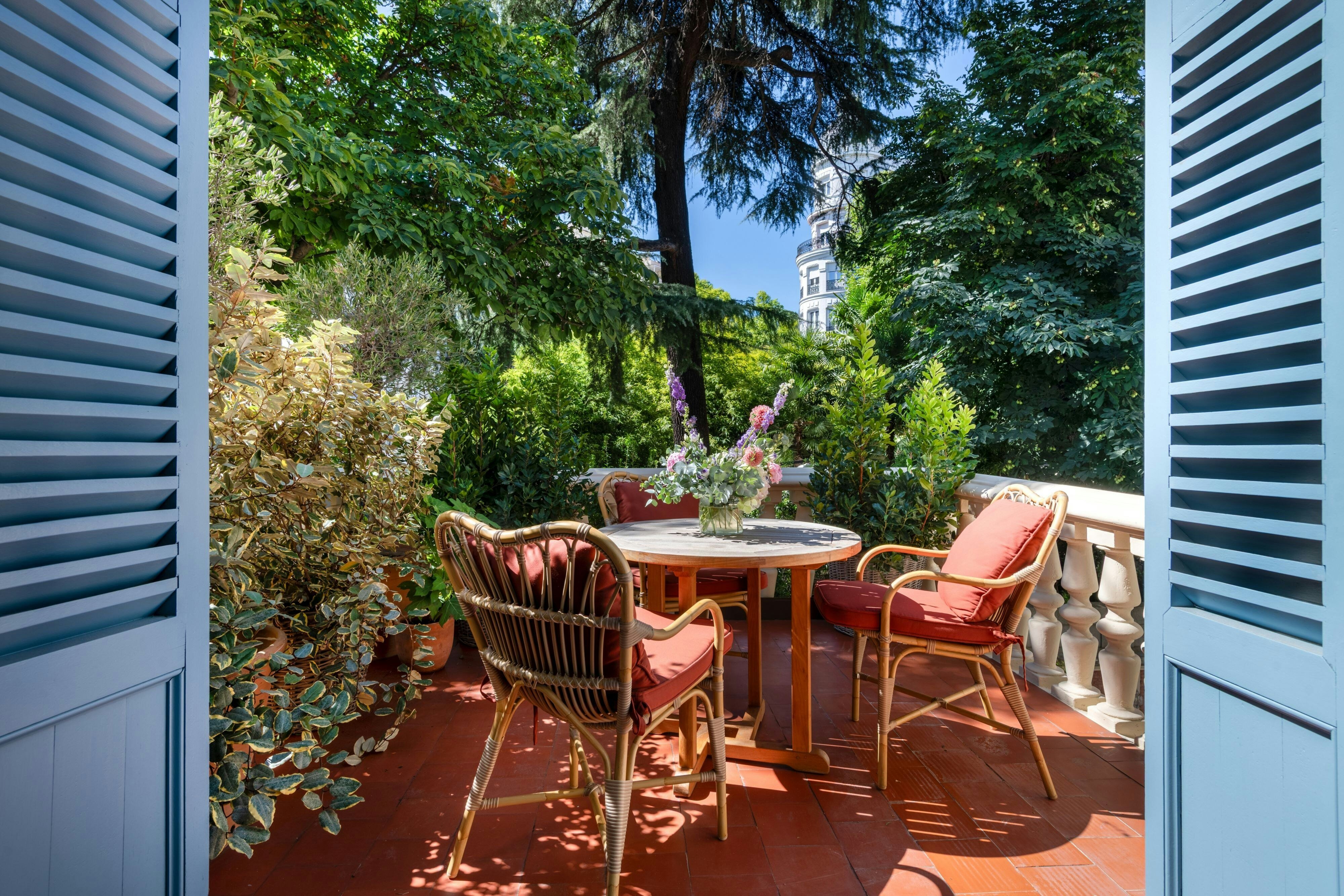
"Tucked into quiet Chamberí in a French-style neoclassical mansion built in 1895, this One MICHELIN Key, intimate and storied refuge — still owned by the descendants of the Duke of Santo Mauro — channels 19th-century aristocratic Madrid with Persian rugs over hardwood floors and individually styled suites across three grand buildings; what sets it apart are the truly personalized attention to every request, an extraordinary garden created in honor of the Duchess and her love of century-old chestnut trees, the daily Casilda cocktail crafted with chestnuts and served each afternoon, and ever-present fresh flowers in prized oriental porcelain vases." - The MICHELIN Guide
"A magnificent, One MICHELIN Key stay in an authentic 1895 neoclassical mansion near the Castellana neighborhood, this is without a doubt one of the city’s most luxurious accommodations; its 51 exclusive rooms are a favorite of foreign authorities and celebrities who come for an authentic haven of peace in the middle of the city’s hustle and bustle." - The MICHELIN Guide
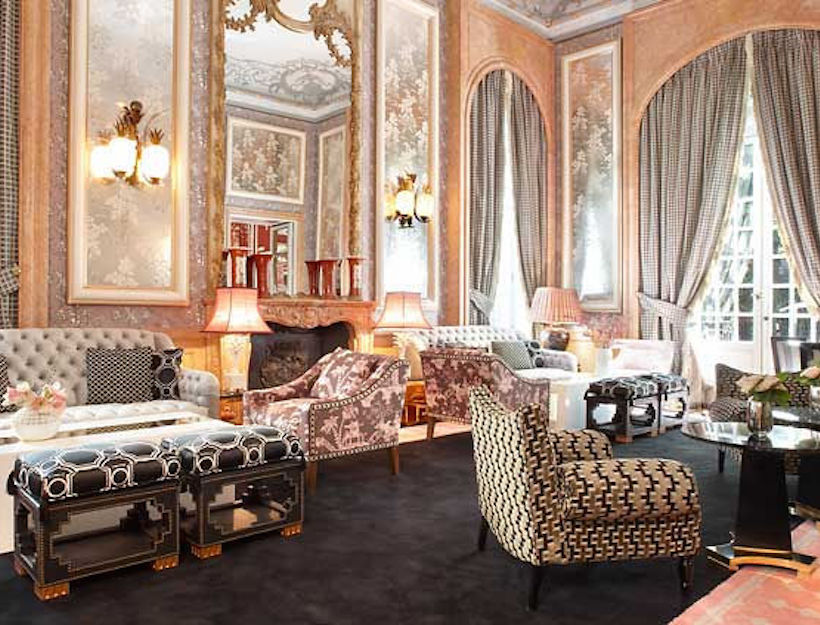
"Santo Mauro’s classic status lies beyond the tawdry plane of real life. Built between 1898 and 1902 as the private palacio of the Dukes of Santo Mauro, who still own the building, the 49-room bubble of gorgeousness, now part of Marriott’s Luxury Collection, occupies an affluent corner of the Almagro neighborhood, where the ebullience of Chamberí gives way to embassies and private clinics. High-ceilinged public rooms compete in fin de siècle grandeur, but design doyen Lorenzo Castillo’s major interior refresh has removed some of the old hauteur, bringing a certain lightness and chic in spite of the many engravings and antiques. The walls have been upholstered and ceiling moldings under-lit; restored parquet floors creak underfoot. The wood-paneled La Biblioteca Gresca is now the setting for Barcelona-based chef Rafael Peña’s refined Mediterranean market cooking. An outpost of his Gresca in Barcelona, it serves traditional Spanish fare surrounded by walls of colorful books. Meanwhile, the French-style formal garden has been reimagined by landscaper Fernando Valero as a maze of box hedges and trickling fountains, with crunching gravel, towering horse chestnut trees, and fences draped with ivy."


